Jordan River Crossing
As the Jordan River flows further south, it becomes dirtier and more polluted. A lot of the river is being used for irrigation, so by the time you get to the southern part of the Jordan River, it is only a couple feet wide before it trickles into the Dead Sea.
It is here that the Israelites crossed over the river into the promised land on dry ground. In those days, the river would have been much, much wider, and the area more lush.
Yet as soon as the priests who carried the ark reached the Jordan and their feet touched the water’s edge, the water from upstream stopped flowing. It piled up in a heap a great distance away, at a town called Adam in the vicinity of Zarethan, while the water flowing down to the Sea of the Arabah (that is, the Dead Sea) was completely cut off. So the people crossed over opposite Jericho. The priests who carried the ark of the covenant of the Lord stopped in the middle of the Jordan and stood on dry ground, while all Israel passed by until the whole nation had completed the crossing on dry ground.
Joshua 3:15-17 NIV
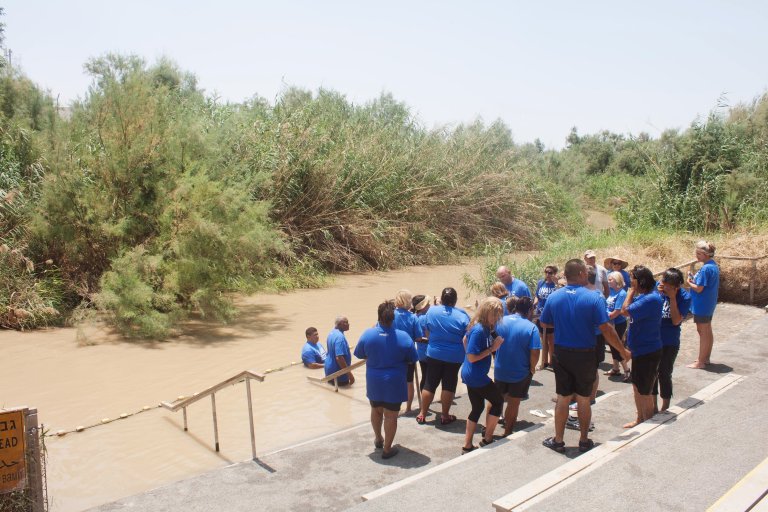
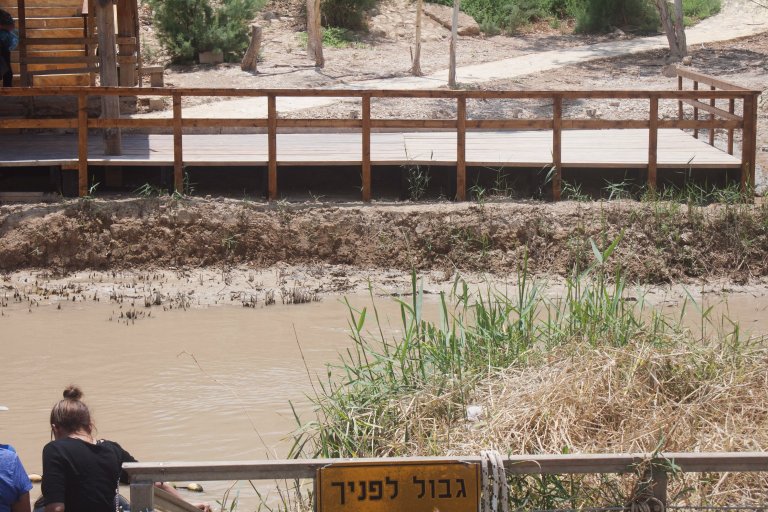
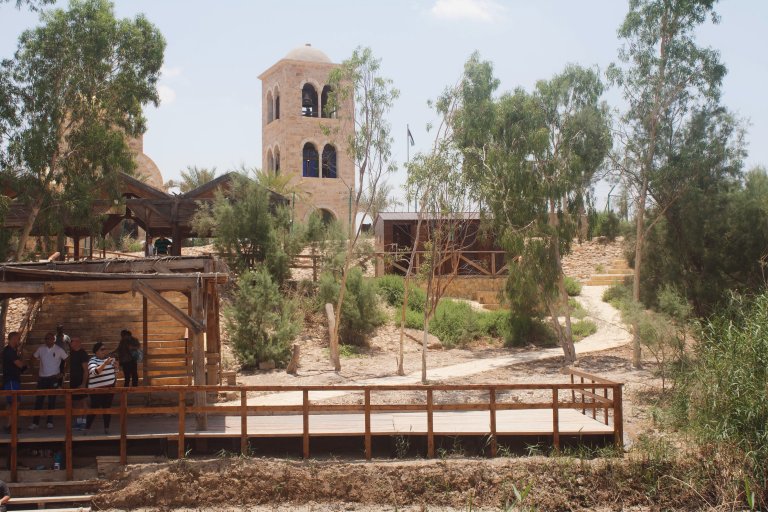
It is also this part of the Jordan that is believed to be the place where Jesus was baptized. If you look at the picture, you will see why we got baptized further north, and not here. However, the pollution (and sewage!) doesn’t stop everyone. There were still plenty of people being baptized here.
Valley of The Shadow of Death
Even though I walk through the valley of the shadow of death, I will fear no evil, for you are with me; your rod and your staff, they comfort me.
Psalm 23:4 NIV
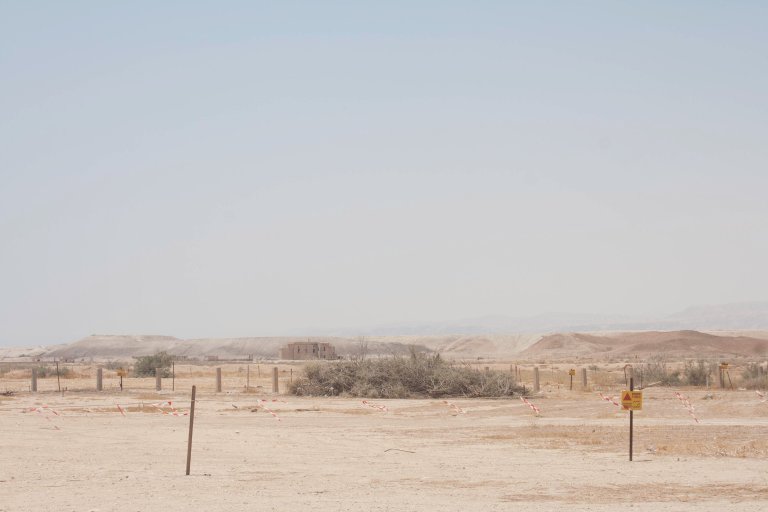
This Valley is home to the Monastery of St. George, and is also often referred to as the “valley of the shadow of death.” It parallels the old Roman road to Jericho, the setting of the parable of the Good Samaritan. It was a very dangerous road to travel on.
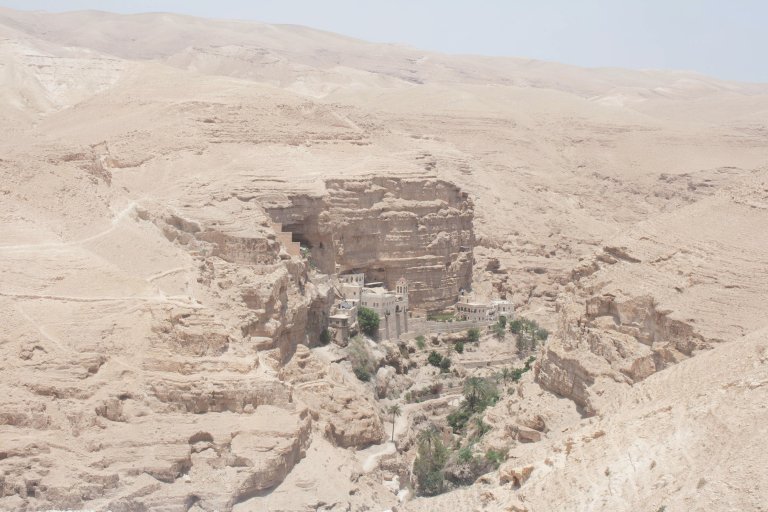
Jesus said: “A man was going down from Jerusalem to Jericho, when he was attacked by robbers. They stripped him of his clothes, beat him and went away, leaving him half dead. A priest happened to be going down the same road, and when he saw the man, he passed by on the other side. So too, a Levite, when he came to the place and saw him, passed by on the other side. But a Samaritan, as he traveled, came where the man was; and when he saw him, he took pity on him. He went to him and bandaged his wounds, pouring on oil and wine. Then he put the man on his own donkey, brought him to an inn and took care of him. The next day he took out two denarii and gave them to the innkeeper. ‘Look after him,’ he said, ‘and when I return, I will reimburse you for any extra expense you may have.’
Which of these three do you think was a neighbor to the man who fell into the hands of robbers?”
The expert in the law replied, “The one who had mercy on him.”
Jesus told him, “Go and do likewise.”Luke 10:30-37 NIV
We don’t know if this was a true story or not, as it was only a parable, but the man who took care of the wounded man not only got him to safety, but payed for his care, and any other expenses that he incurred. Even today, this is such a hard lesson to learn. Do we help people when it is convenient, or do we help them even when it is not?
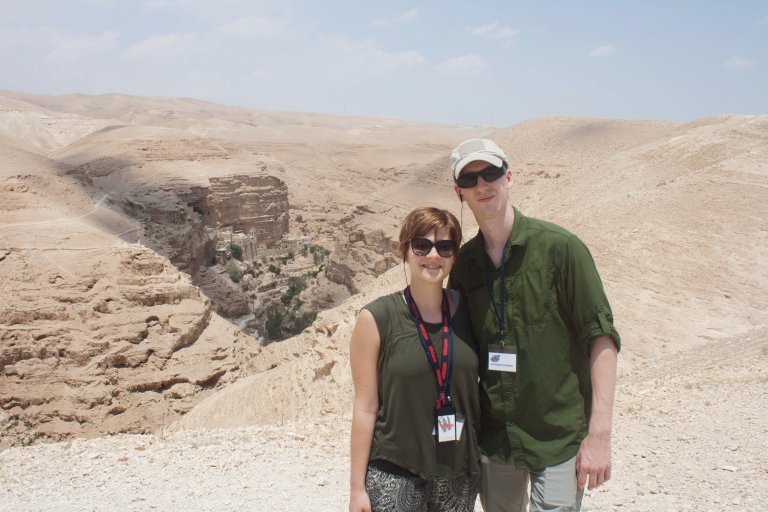
Which bible story do you wish could be made more alive to you through seeing it in person? Let me know! I still have many more stories to share. Thanks for reading, friends.
 Imagine Israel